Flamenco at Café Ziryab
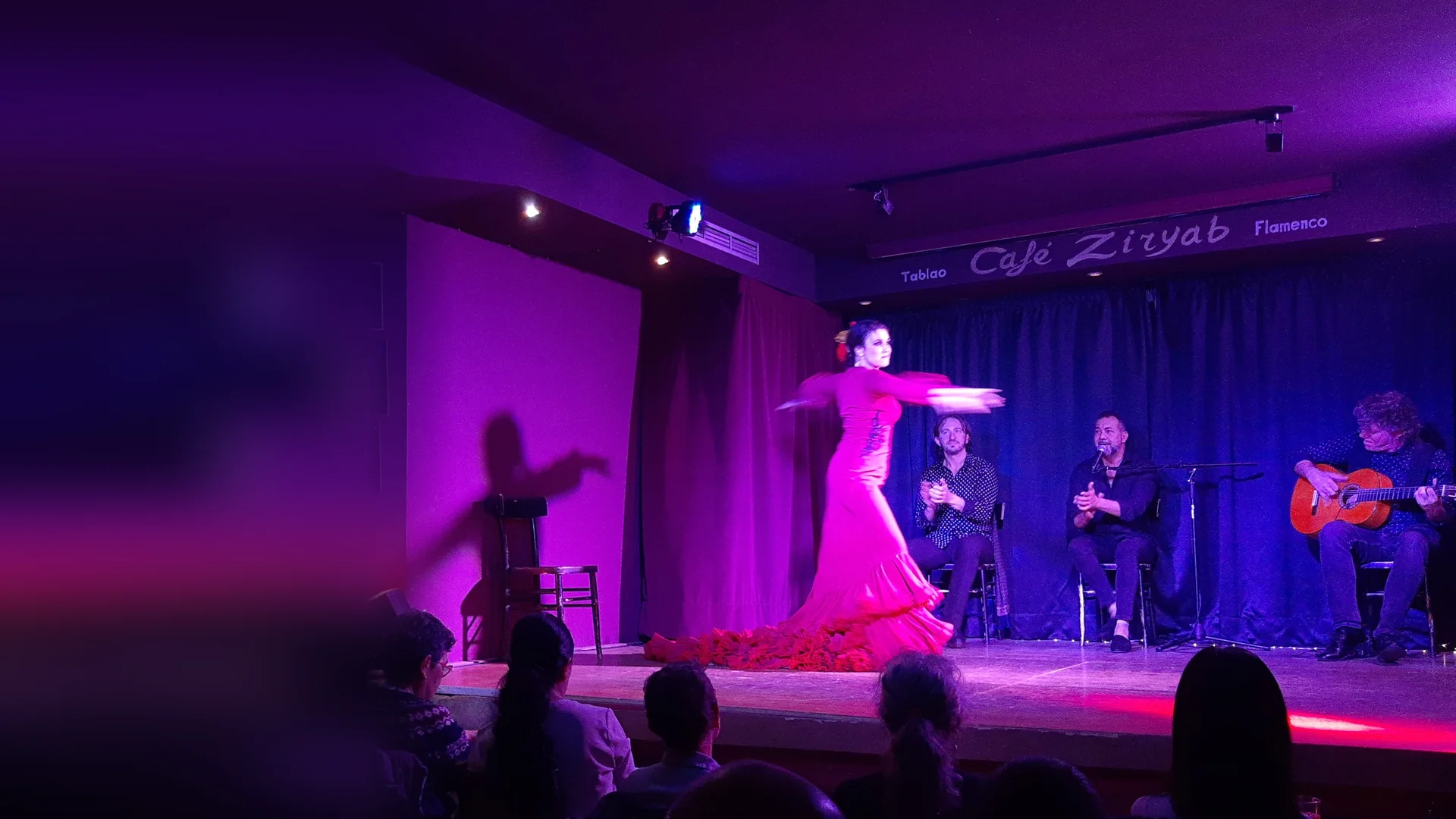
Dancers, a singer and a guitarist on a small café stage, with one drink on the ticket.
Madrid · Arganzuela
Dancers, a singer and a guitarist on a café stage a few metres away, with a drink included.
A different lineup every week, on a stage small enough to hear every footstep and guitar note.
The place in four facts
The name on the door
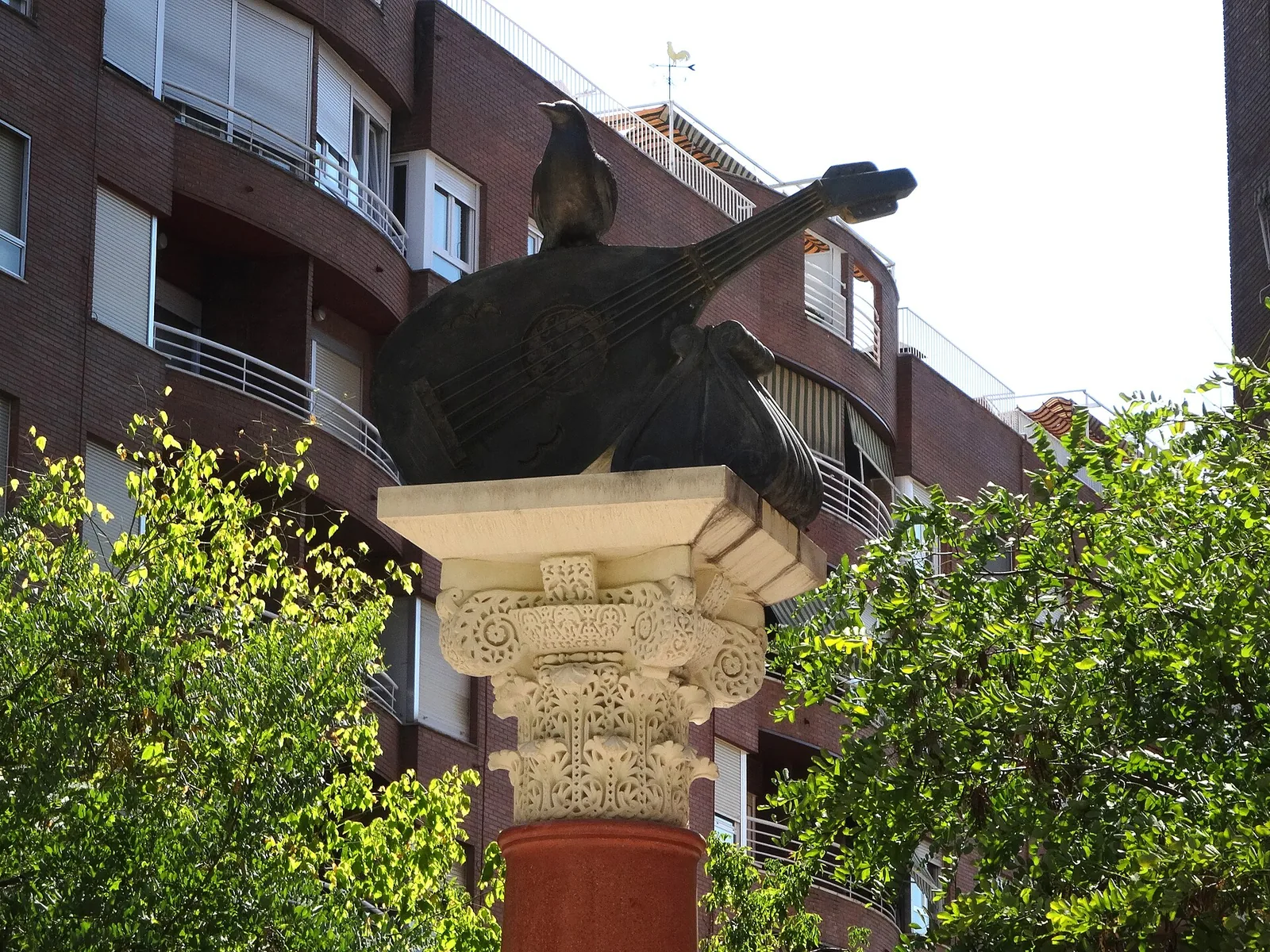
Ziryab was born around 789 or 790, most likely in Baghdad, and the name is a Persian and Kurdish word for blackbird. The chronicler Ibn Hayyan said it came from his dark complexion, clear voice and pleasant manner. Invited to al-Andalus around 822, he became court musician to the emir Abd al-Rahman II in Córdoba and died there around 857.
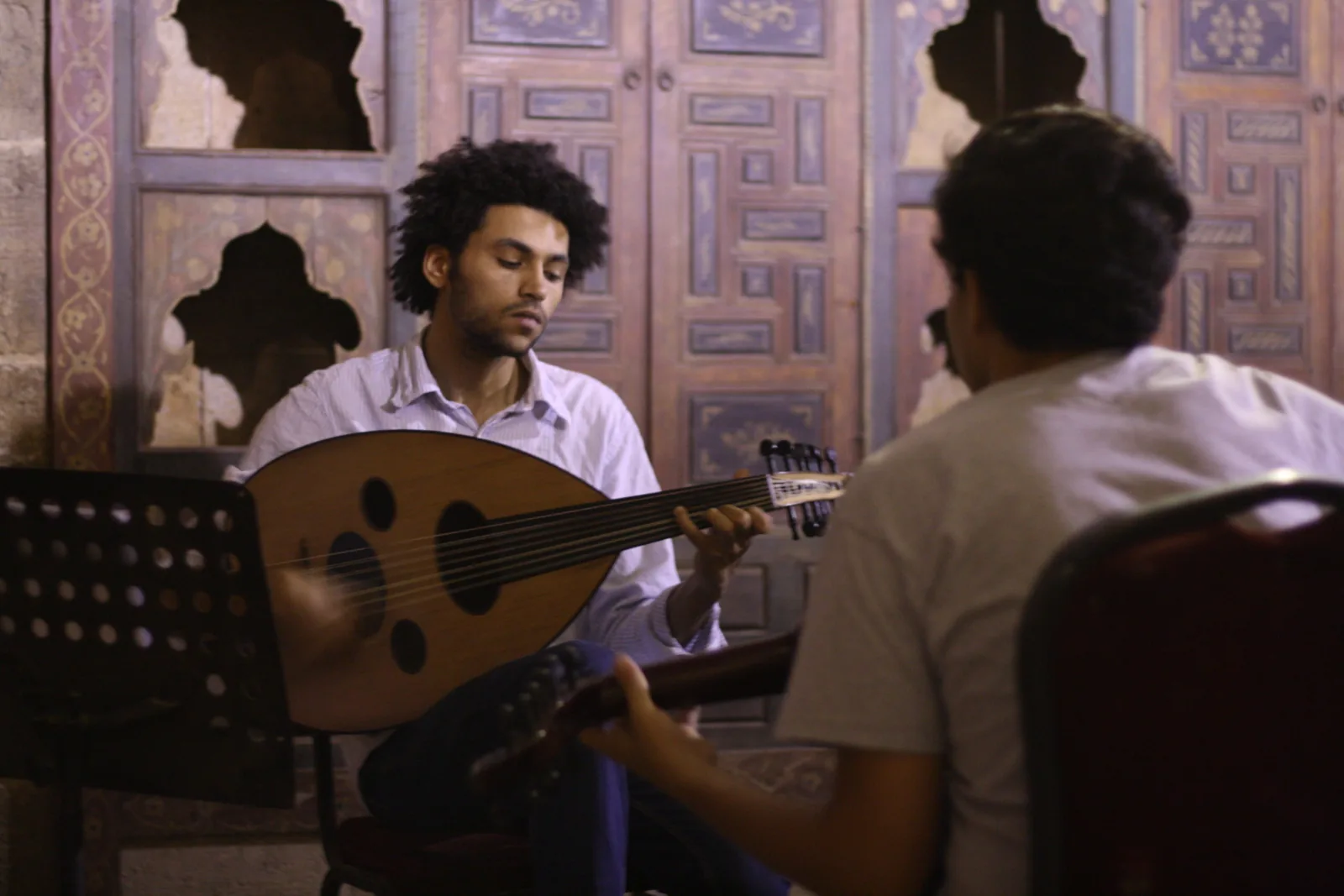
He is said to have added a fifth pair of strings to the oud, and he founded one of Córdoba's first music schools. Tales of meals in three courses, crystal glasses and fashion for each season are told about him too, though some historians doubt that one man changed so much. The café's own site cites several of these gifts when it explains its name.
Scholars still argue about how much of flamenco's roots lie in Arab-Andalusian music. The view most accepted today joins the Gitano and Andalusian traditions. One thread is plain on the guitar: the alzapúa, a thumb technique, has roots in oud plectrum playing, and tradition credits Ziryab with changing the oud.
How the hour unfolds
The format is simple: arrive, take a drink, listen for an hour, step back into the street.
The booking page asks for twenty minutes before the start, and the café's own site says fifteen to twenty. Staff arrange the seating, so show your confirmation at the door.
Your ticket includes one drink. Cold tapas and further drinks can be bought at the venue while the room fills.
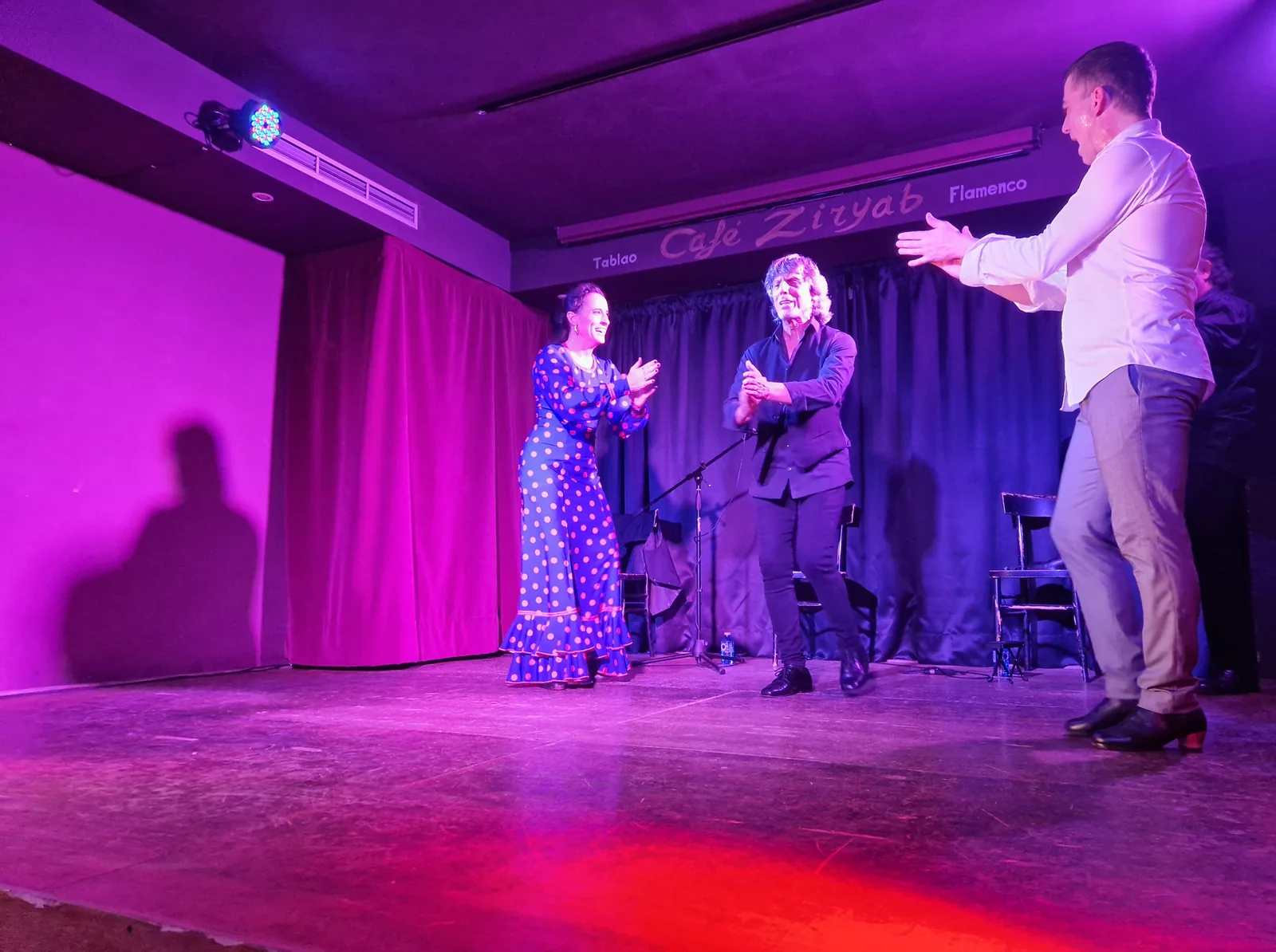
Dance, song and guitar share a small stage for about 60 minutes. The room keeps quiet while the artists work.
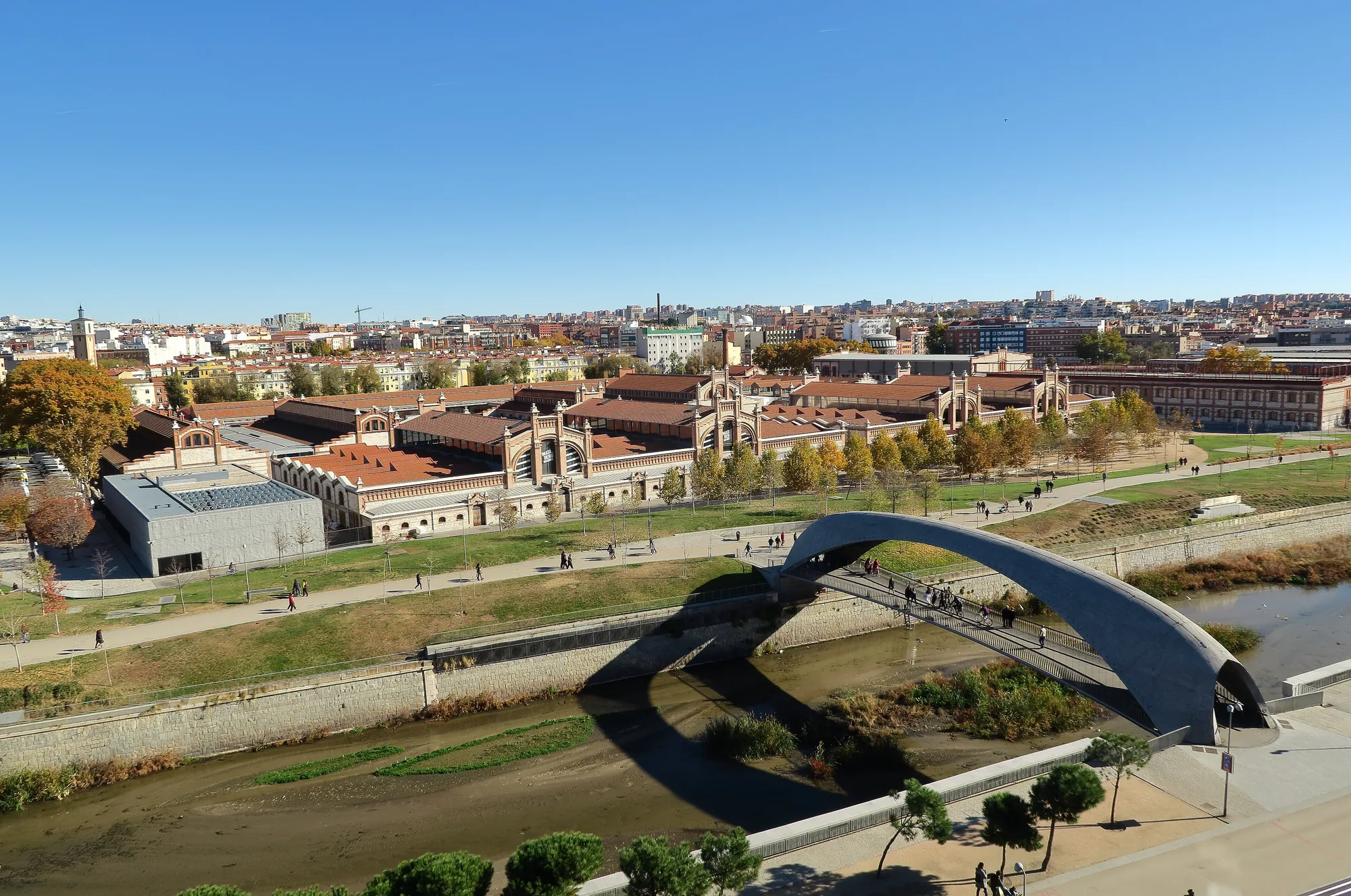
Arganzuela lies along the Manzanares, where Madrid Río, a riverside park, was built after a ring road was buried.
A listener's lexicon
Flamenco's forms each carry a name, a palo, with a mood and a counting pattern of their own. Six of them turn up in many programmes and give a first-time listener something to hold on to.
Soleá is counted in twelve beats and sits within the deep-song family, cante jondo. Wikipedia calls it solemn and says tradition gives it Romani roots. Hear the singer pull a line out long while the guitar keeps time underneath.
Seguiriya also follows twelve beats, with the strong ones placed differently from soleá. It sits in the same solemn deep-song group and is tied closely to Romani music culture. A hushed room matters most when this one begins.
Tangos run on a four-beat cycle and are set against the solemn deep songs as fast and festive. Wikipedia sets them against the deep songs as the lively side of flamenco, so listen for the mood in the room to lift.
Tientos keep the four-beat frame of the tangos family but move at a slower pace with more syncopation.
Guajira belongs to the ida y vuelta, or round-trip, forms: songs that travelled from Spain to the New World and returned changed. It shares the rhythm and feel of the tangos.
Fandango began as a folk dance popular in 18th-century Spain and Latin America. Regular fandangos are in triple time, and freer forms grew from them.
The lineup changes weekly and the artists choose what to play, so use this as a listening aid, never a running order.
What the ticket includes
A short list to read before you book.
Córdoba, Seville and the Manzanares
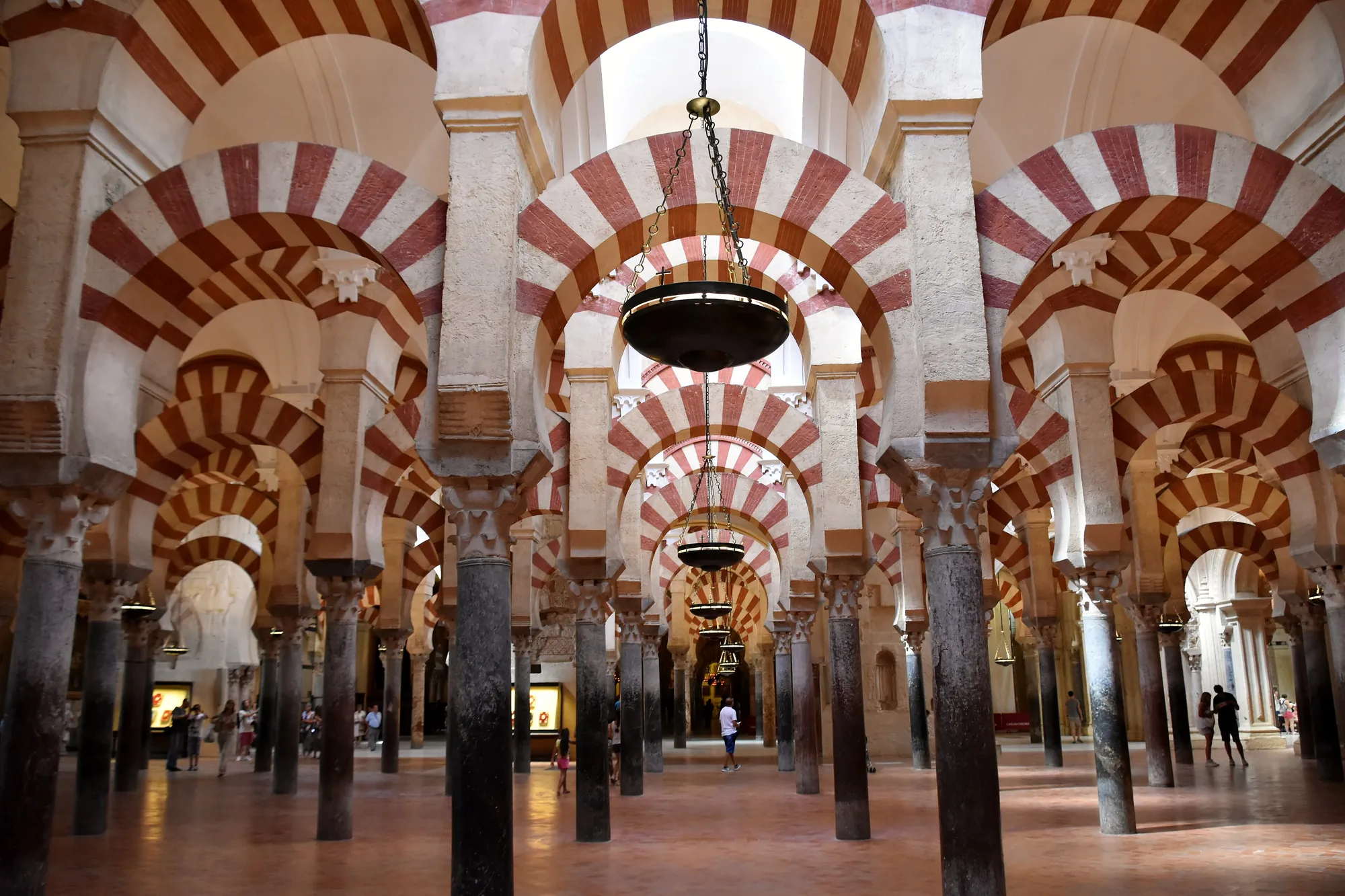
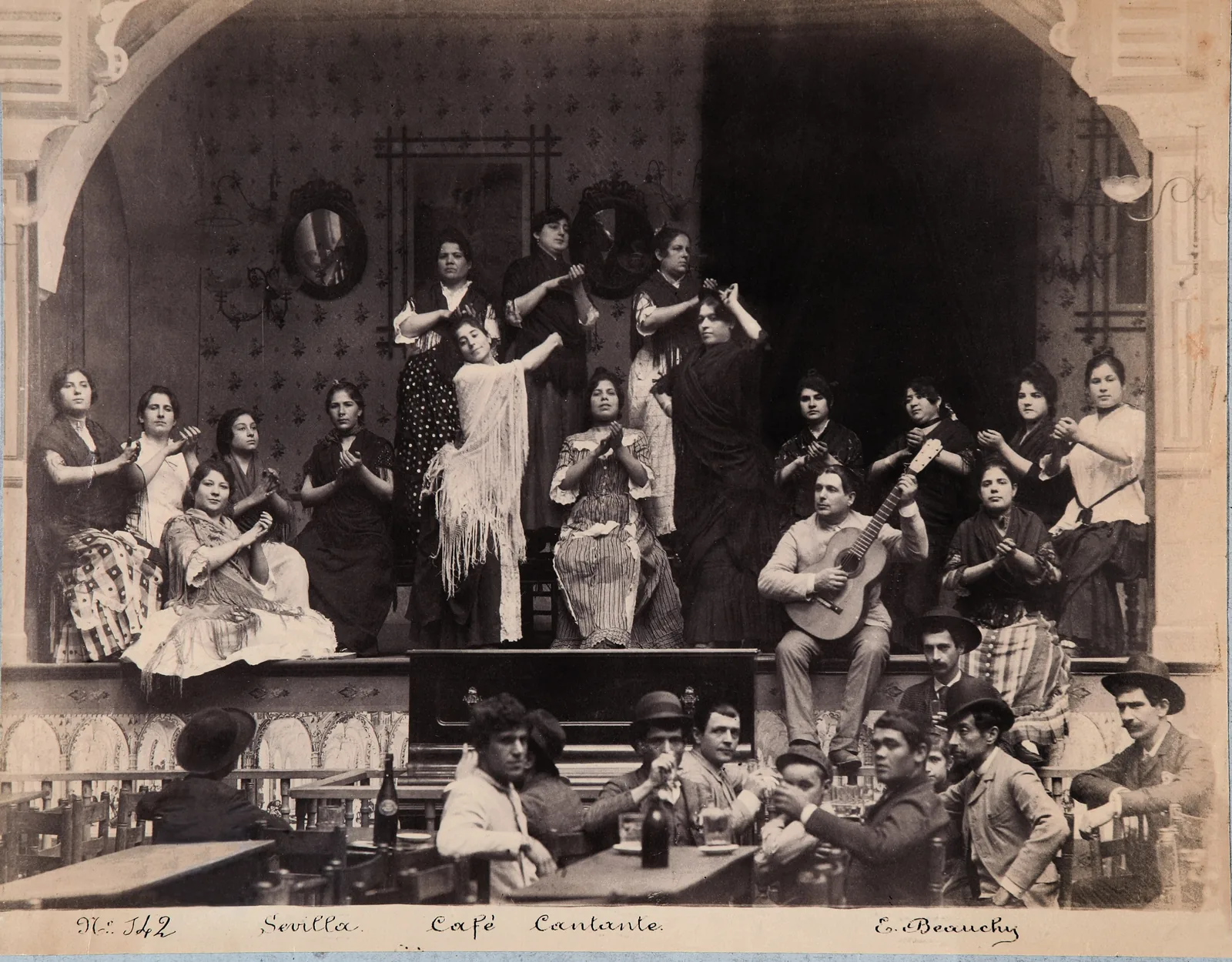
These photographs show Arganzuela, the Great Mosque of Córdoba, which Ziryab's patron Abd al-Rahman II enlarged, a Seville café cantante around 1888 and an oud lesson in Cairo. Only the hero image and the stage close-up show Café Ziryab itself.
Three kinds of flamenco evening
| The evening | What it is | Who it suits |
|---|---|---|
| One show with a drink (this ticket) | Roughly an hour of flamenco in a small café room, one drink on the ticket. | A first flamenco hour, or a short evening before dinner |
| Double ticket for two | The booking page offers a ticket for two with Spanish tapas and drinks. Pick it on the booking page. | Couples who want a bite and a glass with the music |
| A larger tablao with dinner | A bigger stage, usually a full dinner and a longer evening. It is a different ticket and a different night out. | Groups who want the evening built around a meal |
See dates and the double-ticket option on the booking page ↗
Choose your evening
The first card is the ticket this page covers. The two below are one-hour flamenco shows in other Madrid rooms, each with its own feel. Pick a date to see open sessions.
Dancers, a singer and a guitarist on a small café stage, with one drink on the ticket.
A one-hour show with live music and a complimentary drink in a cabaret-style room, with a traditional dinner as an option.
A one-hour show in a theatre built with tiered rows so everyone sees the stage, plus VIP tables near it.
Other things to do in Madrid
Before you set out
Café Ziryab is at Paseo de la Esperanza 17, 28005 Madrid, in the Acacias area of the Arganzuela district. The café's site says it is next to Acacias metro station.
The Madrid tourism board names Acacias, Embajadores and Pirámides metro stations nearby, plus Embajadores and Pirámides for local trains. The café's site adds that a large car park stands close by.
Plan to be at the door fifteen to twenty minutes before the session time on your confirmation. The venue team will seat you.
The venue team assigns seating, so there is no table choice at booking. Staff place guests as they arrive.
Keep your voice down while the artists perform. The café's site allows photos without flash and short clips, not a recording of the whole show.
The bar sells cold tapas and more drinks. Your ticket brings one drink and no food.
Guides to Café Ziryab, its namesake and flamenco
FAQ
Around an hour: the café and the booking page both give 60 minutes. The calendar and your confirmation list the start time of each session.
Yes, one: wine, beer, sangria or a soft drink. Cold tapas and further drinks are for sale at the café.
No. This ticket is for the show and one drink. The booking page offers a double ticket for two with Spanish tapas and drinks if you want food with the music.
No. The venue team arranges the seating. Arriving fifteen to twenty minutes early lets staff place you before the lights change.
The café's site says the show suits all audiences. The room asks for silence while the artists perform, so think about how long your child can sit quietly.
No. Flamenco is mostly felt through movement, guitar and the voice. The songs are in Spanish, and a short read of the guide on listening helps.
The café's site allows photos without flash and short clips. Recording the whole show needs the venue's permission. Keep your phone quiet and low during the show.
If plans change, cancel any time until a day before the show and every cent comes back. Booking itself charges nothing, because payment follows later.
The fare depends on the date. Choose a night and your own currency appears on the booking page.